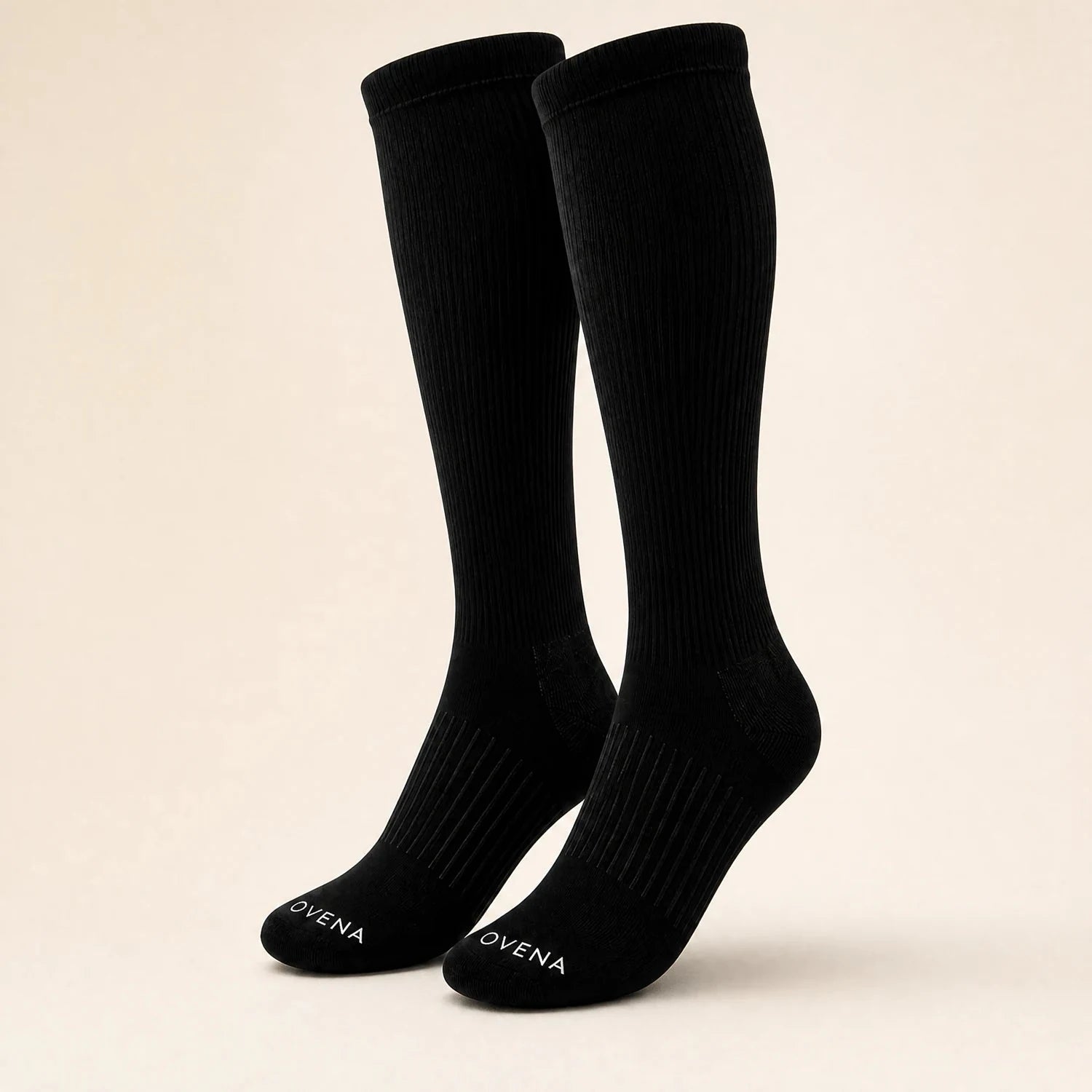
Copper Fit vs medical compression socks
The difference between consumer compression sleeves and medical-grade graduated compression socks, including when 20-30 mmHg support matters.
 Reviewed byDr. David Chahine, MD
In this comparison
Copper Fit (and competitors like Tommie Copper) market copper-infused fabric as performance shapewear, "compression" and "recovery" and "copper ion benefits." If your doctor told you to get medical compression and you bought Copper Fit, this guide is for you. They're not the same category. Copper Fit is athletic shapewear; medical compression is a regulated pressure class. Both have a place, but they don't substitute for each other.
Side-by-side comparison
| Ovena | Copper Fit / Tommie Copper / generic copper-infused shapewear | |
|---|---|---|
| Pressure delivered | 20-30 mmHg graduated (regulated, measured) | 8-15 mmHg approximate, uniform (not gradient) |
| Category | FDA-regulated medical compression | Athletic shapewear / cosmetic |
| Indications | DVT prevention, occupational standing, post-op, varicose veins, lymphedema | General comfort, fitness marketing |
| Evidence base | Cochrane meta-analyses, ACCP guidelines | Limited; copper claims not supported by clinical trials |
| FSA / HSA eligible | Yes (Letter of Medical Necessity) | Generally no (not regulated as medical) |
| Recommended by | Vascular surgeons, wound care clinicians, occupational health | Not standard clinical recommendation |
The marketing vs the product
Copper Fit's marketing has two pillars: "compression" and "copper ion benefits." Let's look at both honestly.
On compression: Copper Fit garments deliver roughly 8-15 mmHg of uniform pressure, not graduated. Uniform pressure (same throughout the garment) doesn't push venous blood back toward the heart, that's what the gradient does in true medical compression. For DVT prevention, occupational venous insufficiency, and post-surgical recovery, you need graduated 20-30 mmHg. Copper Fit doesn't deliver that.
On copper: The claimed mechanism is copper ions transferring through fabric to skin for anti-inflammatory or antimicrobial effects. No published randomized trial has demonstrated meaningful clinical benefit from copper-infused fabric for joint pain, recovery, or inflammation. The FTC has previously cited similar products (Tommie Copper) for unsupported health claims (FTC vs Tommie Copper, 2015).
When Copper Fit is fine to wear
If you bought Copper Fit and you like how it feels, for general support during a workout, mild comfort, or because you find the copper-infused fabric pleasant, there's nothing wrong with wearing it. Athletic shapewear isn't dangerous; it just isn't medical compression.
When you need real medical compression
- You're a nurse on a 12-hour shift and want to prevent ankle swelling and varicose veins. Get 20-30 mmHg graduated.
- You're flying transcontinental. Cochrane evidence is on 15-20 or 20-30 mmHg graduated compression, not Copper Fit.
- You're post-surgical and the discharge instructions say wear compression. They mean medical compression. Buy 20-30 mmHg from a clinical brand (Ovena, Jobst, Sigvaris, mediven).
- Your doctor diagnosed venous insufficiency, varicose veins, or lymphedema. Medical compression, not athletic shapewear.
- You have a history of DVT or known clotting disorders. Medical compression under doctor's guidance.
What "real" compression looks like in spec sheets
Real medical compression states the ankle pressure explicitly: "20-30 mmHg knee-high" means 20-30 mmHg AT THE ANKLE, graduating down. Athletic shapewear typically doesn't publish pressure ratings because they're not regulated to do so.
The other tell: medical compression is consistently described as "graduated", pressure changes along the length. Athletic shapewear is described as "compression fit" or "support" without a gradient specification.
Frequently asked questions
Does Copper Fit do anything?
Is the copper claim real?
Can I wear Copper Fit on a flight for DVT prevention?
If I'm a nurse, should I wear Copper Fit?
Shop Ovena 20-30 mmHg Medical Compression →
$32 / pair · true graduated · Cochrane-backed indications
Shop Ovena 20-30 mmHg Medical Compression →