
Collagen Wound Care
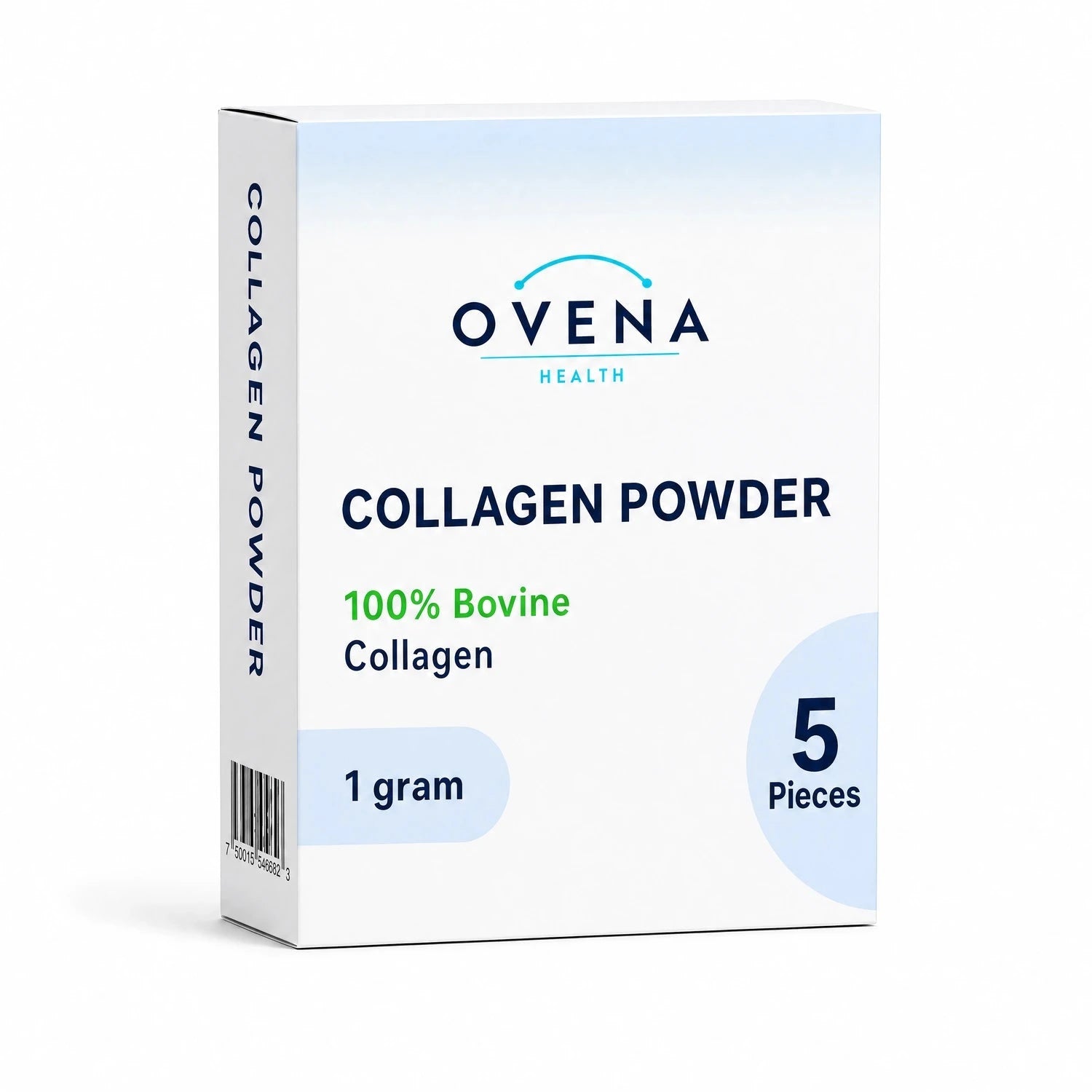
Collagen Wound Powder


Collagen Wound Care
Collagen Wound Powder
- Pours to fill wounds a flat pad can't reach
- 100% Type I bovine collagen, FDA 510(k) cleared
- Pre-measured sterile 1-gram single-use packets
- Conforms to tunneling, deep, and irregular wounds
- Absorbed in place, nothing to remove at the next change
Collagen wound powder for irregular, tunneling, and hard-to-dress wounds where a flat pad won’t conform, 100% Type I bovine collagen, FDA 510(k) cleared, pour-to-fill application. Five single-use 1-gram packets.
Ovena’s sterile, FDA 510(k)-cleared collagen wound powder pours directly into the wound bed to reach undermined edges, tunnels, and irregular contours that sheet dressings can’t conform to, diabetic foot ulcers, pressure injuries, venous leg ulcers, surgical and post-Mohs wounds, and other slow-to-heal chronic wounds. The micronized Type I collagen scaffold attracts fibroblasts, supports new granulation tissue, and helps maintain the moist, balanced wound environment healing depends on, then is gradually absorbed so there’s nothing to remove at the next dressing change.
Clinical Studies
Diabetic ulcer RCT (2020) → Systematic review (2020) → · PubMed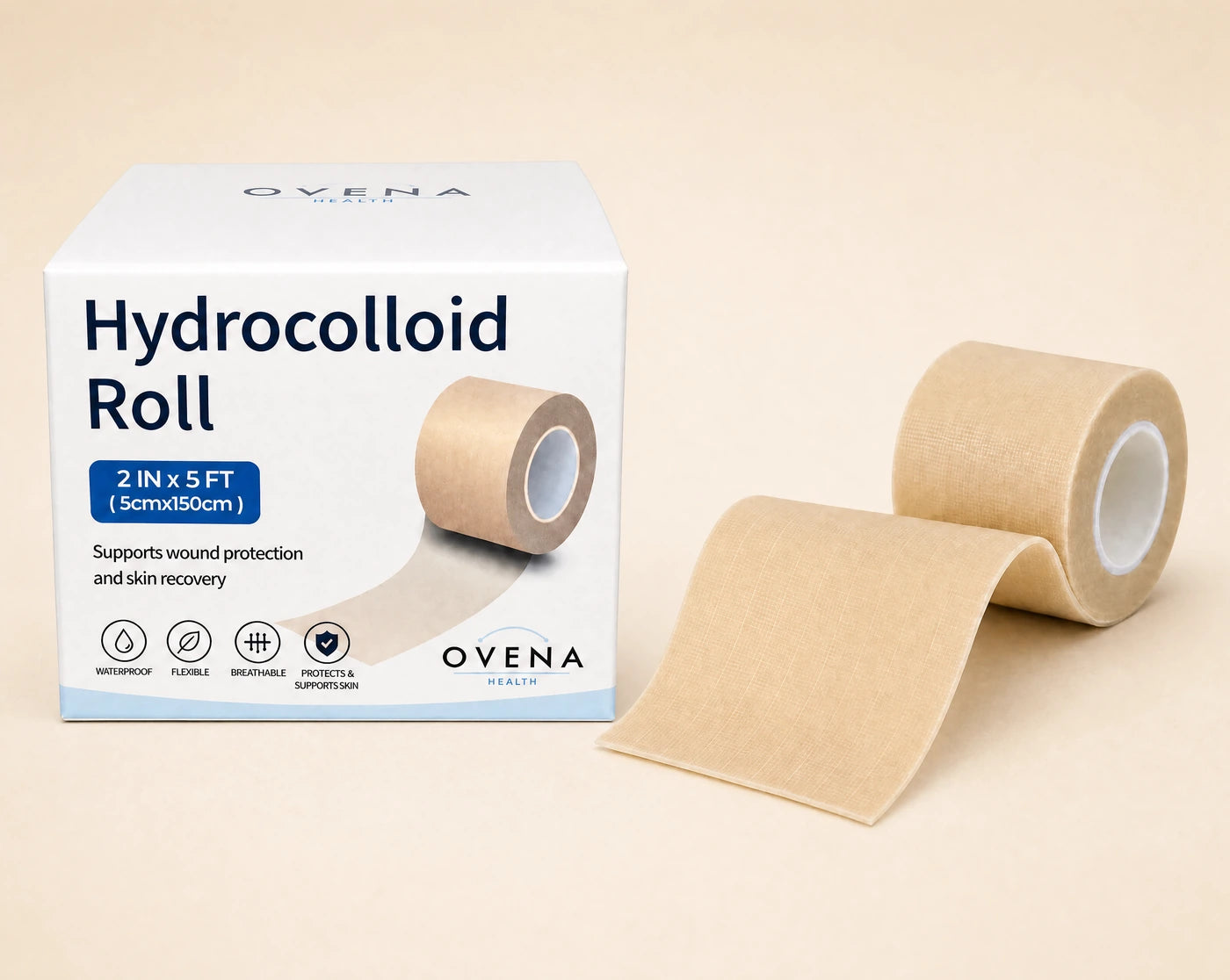
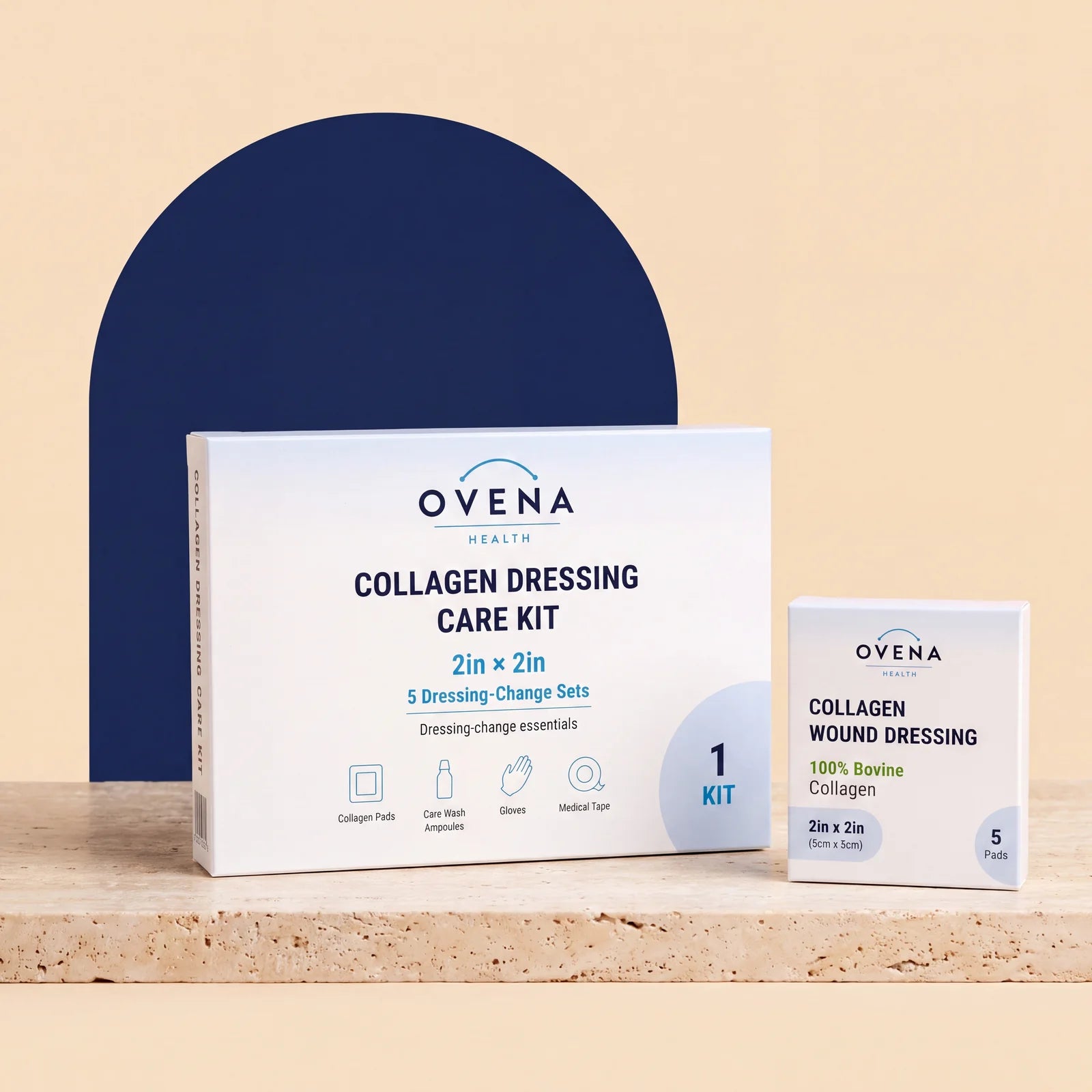
Powder vs. dressing
When powder reaches what a pad can’t.
Same 100% Type I bovine collagen, two formats. A flat pad covers flat wounds; the micronized powder pours in to fill the wounds a sheet can’t conform to.
when the wound is…
- Tunneling or undermined
- Deep cavities & irregular contours
- Jagged or non-uniform edges
- Hard to dress, between toes, sacrum, heel
when the wound is…
- Shallow and flat
- A regular, coverable shape
- On a surface a sheet sits flush against
Why the format matters
Pours to fill
Conforms to the wound bed’s true shape instead of bridging over it.
Reaches undermining
Gets into tunnels and undermined edges a flat sheet can’t follow.
Absorbed in place
Gradually absorbed, so there’s nothing to remove at the next change.
Same FDA 510(k)-cleared Type I bovine collagen in both formats. Choose by wound shape with your clinician, general product information, not medical advice.
Collagen wound care
Powder, for where sheets do not fit.
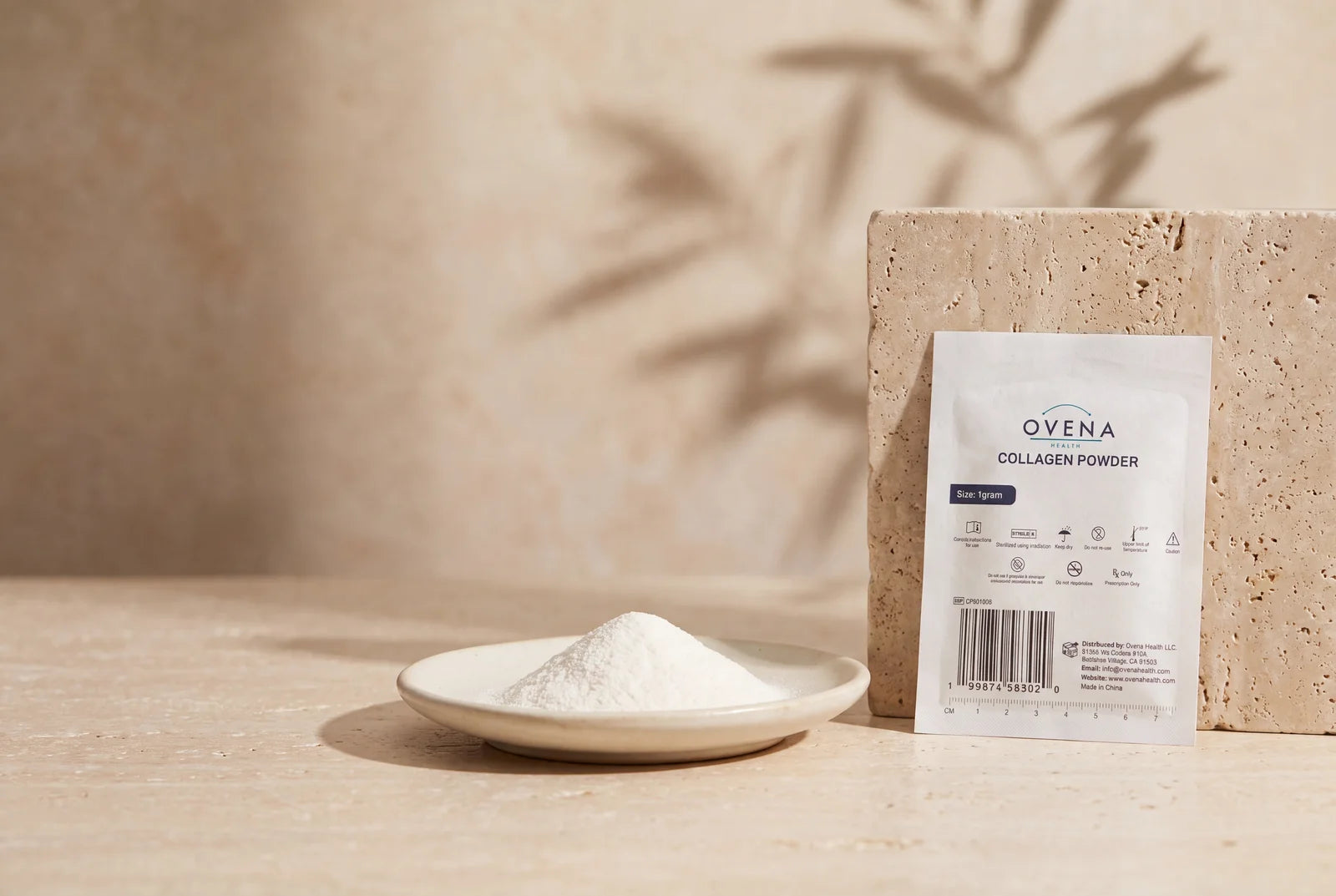
100% Type I bovine collagen in single-use powder packets. Provides a collagen scaffold that supports the wound healing process, for wounds and contours where powder fits better than a sheet.

The category clinics use
Built for advanced wound care.
100% bovine Type I collagen — the dressing category wound clinics use across chronic and complex wounds. Work with your clinician.
General product information, not medical advice. Follow product directions and your clinician's instructions.
Conservative wound care
Conservative care for wounds a pad can't reach.
When a wound is deep, tunneling, or irregular, collagen particles conform where a flat pad can't, keeping management non-surgical.
The conservative routine
Cleanse
Irrigate with saline; pat the edges dry.
Fill
Sprinkle particles to lightly cover the wound bed.
Cover
Apply a secondary dressing over the area.
Reassess
Reapply at each dressing change.
Why it works
Conforms to any shape
Reaches tunneling, undermining, deep and contoured wound beds.
Collagen scaffold
The same Type I collagen matrix that supports new tissue.
Moist wound bed
Helps maintain a moist, balanced environment for repair.
Commonly used for
- Tunneling / undermining wounds
- Deep pressure injuries
- Irregular wound beds
- Diabetic foot ulcers
- Post-debridement wounds
FDA 510(k)-cleared · 100% Type I bovine collagen. Supports conservative wound management, not a substitute for professional medical care.
Materials and construction
What it is made of.
Single-use packets
Each packet is sterile and single-use, so the routine stays clean.
100% Type I bovine collagen
The same collagen as our dressings, in powder form.
Medical product, not a supplement
For topical use in wound care routines as directed by your clinician.
Inside the box
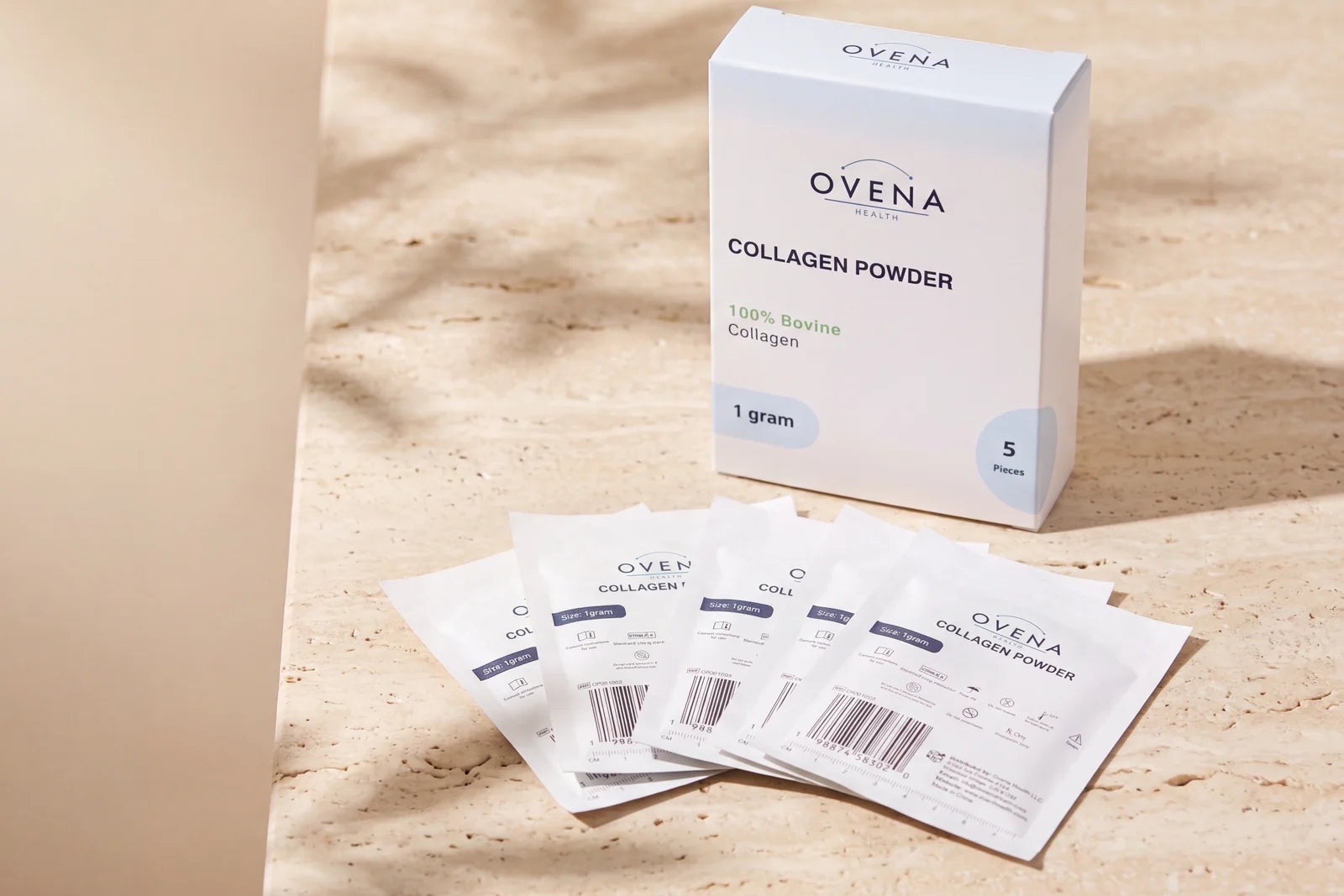
Five single-use sachets, one gram each.
Each box holds five individually sealed 1-gram sachets of 100% Type I bovine collagen. Open one sachet per dressing change, pour directly into the wound bed, and discard. No jar to re-open, no waste.
How to use
The routine, step by step.
Cleanse
Clean the area as directed and pat dry.
Apply
Dispense powder over the wound bed as directed.
Cover
Secure with a secondary cover dressing.
Follow directions
Repeat per your clinician's schedule.
Always follow your clinician's directions for your care plan.
Product details
- Format
- Powder particles, single-use packets
- Material
- 100% Type I bovine collagen
- Use
- Clinician-directed wound care routines
- Manufacturing
- ISO 13485-certified facility
Good to know
- Not for use on infected wounds until the infection is addressed by your clinician.
- Do not use with a known sensitivity to bovine-derived materials.
Referenced research
The evidence behind the category.
Independent published research on this product category. Studies describe the category and mechanism, individual results vary.
RCT · 2020 · Adv Wound Care
Bovine collagen vs. standard care in diabetic foot ulcers
Randomized controlled trial: the collagen arm showed faster percentage wound-area reduction than standard moist wound care in chronic diabetic foot ulcers.
Systematic review · 2020 · J Wound Care
Advanced dressings for chronic, non-healing wounds
Collagen scaffolds outperformed standard gauze across healing endpoints in chronic non-healing wounds.
Common questions
When is powder preferred over a sheet?
Powder is sometimes preferred for irregular contours where a flat sheet does not sit well. Your clinician will direct which format fits your routine.
Is this FSA/HSA eligible?
It may be FSA/HSA eligible. Eligibility varies by plan, so check with your administrator and keep your receipts.
Further reading
Clinically reviewed by Dr. David Chahine, MD. The deeper-dive guides our customers ask for most often.
How to apply a collagen wound dressing
Includes the powder pour-to-fill technique for cavity wounds.
Read guide →Explainer · 9 minWhat are matrix metalloproteinases?
The enzymes that stall healing, and how collagen binds them.
Read guide →Pillar · 8 minPressure ulcer dressing by stage (1–4)
Stage 3–4 cavity wounds are where powder earns its place.
Read guide →Compare · 7 minCollagen vs hydrocolloid, which to use when
Two completely different mechanisms. The decision tree.
Read guide →Questions about products or care routines?
Our clinical team can help with product selection, sizing, and use directions.
Clinical support →