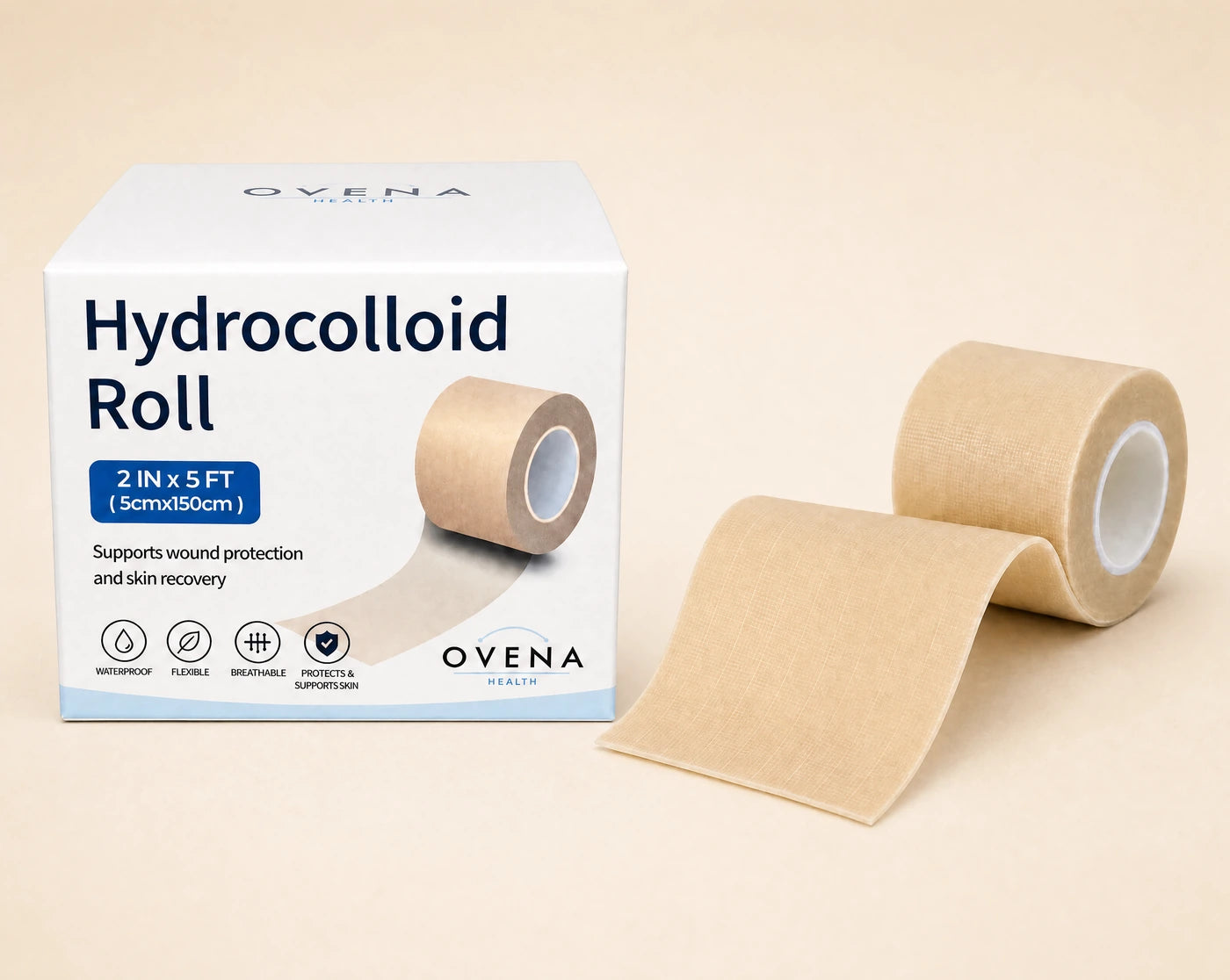
How to use a hydrocolloid roll, cut-to-size basics
How to cut, apply, and remove a hydrocolloid roll safely, plus when cut-to-size hydrocolloid makes more sense than pre-cut patches.
 Reviewed byDr. David Chahine, MD
In this guide
What a hydrocolloid roll is
How to use a hydrocolloid roll starts with understanding what one is. A hydrocolloid dressing is a flexible, self-adhesive sheet that contains gel-forming particles, typically carboxymethylcellulose (CMC), embedded in a waterproof outer layer. When the dressing contacts wound fluid or moisture, those particles absorb the fluid and swell into a soft white or yellowish gel. That moist environment is generally considered supportive for superficial wound management.
Unlike pre-cut hydrocolloid patches (designed for specific, fixed wound sizes), a cut-to-size hydrocolloid roll comes as a continuous roll you cut to the exact dimensions of any wound. Many clinicians find this format practical for irregular wounds, wounds on curved body parts, or situations where you need to adapt quickly as a wound changes size during recovery.
The cut-to-size advantage over pre-cut patches
Pre-cut patches are convenient for wounds that happen to match their dimensions, a standard round acne patch, for example. But most wounds are not standard shapes. A cut-to-size hydrocolloid roll allows you to:
- Match the exact footprint of any wound, including irregular or elongated shapes
- Adjust coverage as the wound changes in size over time
- Minimize waste by cutting only what you need
- Cover larger areas (such as minor burns, abrasions, or blistered skin) in a single piece
The tradeoff is that cut-to-size requires a bit of technique, primarily getting the size, corner rounding, and adhesive activation right.
Step-by-step application
Step 1, Clean the area with saline or water, then pat fully dry
Gently irrigate the wound and the surrounding skin with sterile saline or clean water to remove loose debris and old drainage. Avoid hydrogen peroxide or alcohol on open wounds, they are generally considered too harsh for delicate wound tissue. After cleansing, pat the skin fully dry. Hydrocolloid adhesive bonds to dry skin; residual moisture is the most common reason a freshly applied dressing peels within hours.
Step 2, Cut a piece roughly 5 mm larger than the wound on all sides
Unroll the hydrocolloid and measure against the wound visually or with a clean ruler. Cut so the dressing extends approximately 5 mm (about a quarter inch) beyond the wound edge on every side. This margin provides a full adhesive seal and keeps wound fluid from wicking under the edge. When in doubt, cut a little larger, you can always press extra margin down onto intact skin, but you cannot make the piece bigger once it is cut.
Step 3, Round the corners
After making the main cut, use scissors to snip the four corners into gentle curves. Square corners are the first part of a dressing to peel; rounded corners stay in contact longer, which matters when the dressing is on a joint, heel, or elbow that flexes during movement.
Step 4, Warm it in your hands to activate the adhesive
Hold the cut piece between your palms for about 15–30 seconds before applying. Body heat softens the adhesive layer and makes it more pliable, helping the dressing conform to skin contours rather than bridging across them.
Step 5, Remove the backing and press from center outward
Peel off the release liner, center the dressing over the wound, and press down firmly starting from the middle and smoothing outward toward the edges. Even pressure across the entire surface, including the adhesive border, creates a consistent seal. Hold gentle pressure for 30–60 seconds, especially around the edges.
How long to leave it on
Many clinicians suggest leaving a hydrocolloid dressing in place for several days, a commonly cited range is three to seven days, or until the white gel bubble approaches the edge of the dressing, whichever comes first. Changing too frequently is a common error: each unnecessary removal disturbs the wound environment and can stress the periwound skin. There is generally no benefit to changing a hydrocolloid dressing that is still sealed and functioning.
Wear time varies with wound type and exudate volume. A wound with heavier drainage may saturate the dressing in one to two days; a dry minor abrasion may last a full week. Your clinician's specific instructions always take priority over general guidelines.
The white gel bubble, what it means
As a hydrocolloid dressing absorbs wound fluid, the gel-forming particles swell and turn white or pale yellow beneath the dressing. This produces a visible raised bubble. This is normal and expected, it is not pus, it is not infection, it is the dressing working as designed. Many people misinterpret the gel bubble and remove the dressing prematurely.
The right time to change is when the bubble expands to within roughly 5 mm of the dressing's edge. At that point the absorptive capacity near the edge is nearing saturation, and fluid may begin to seep out. A bubble that stays well within the border means the dressing can generally stay in place.
How to remove it gently
The most important technique for painless removal is to stretch the dressing parallel to the skin rather than peeling it straight up. Press one corner flat against the skin with your non-dominant hand, then use your other hand to pull the edge of the dressing sideways along the skin surface. The low-angle stretch gradually releases the adhesive bond instead of tearing it away from the skin all at once.
Work around the perimeter slowly. If the dressing feels stuck, do not force it, dab a small amount of warm water around the edges and wait 20–30 seconds, then continue the parallel stretch technique.
When to change early
Change the dressing before its normal wear period if any of the following occur:
- The gel bubble reaches the edge and fluid begins leaking out
- The edges peel significantly and the seal is broken
- The wound develops new pain, warmth, swelling, or odor not present before
- You see spreading redness, pus, or green/gray drainage around or beneath the dressing
- You develop fever or feel unwell
Storage
Store unused hydrocolloid roll in a cool, dry location away from direct sunlight or high humidity. Keep the roll in its original sealed packaging until use. Once opened, fold the cut end back against itself or use a small clip to keep the roll clean between uses. Most hydrocolloid rolls carry a printed expiration date, check it, as adhesive performance may decline in aged product.
Cut-to-size hydrocolloid for any wound shape
The Ovena Hydrocolloid Roll is a medical-grade, cut-to-size hydrocolloid available without a prescription, with itemized receipts for FSA/HSA reimbursement.
Shop the Ovena Hydrocolloid Roll →