Showering with hydrocolloid, does it actually stay on?
 Reviewed byDr. David Chahine, MD
In this guide
How hydrocolloid handles water, is it waterproof?
Showering with hydrocolloid is a common concern, and the short answer is: a brief, warm shower is usually fine. Hydrocolloid dressings form a water-resistant, occlusive seal against the skin. That seal keeps wound fluid in and outside contaminants out, and it also keeps short-duration water from reaching the wound bed.
The important distinction is water-resistant, not waterproof. The adhesive border of a hydrocolloid dressing can handle brief, low-pressure water exposure reasonably well when the edges are pressed flat. Prolonged soaking, baths, swimming pools, or standing under a hot direct stream for an extended shower, is a different matter. Sustained moisture pressure works its way under the edges over time, weakening the bond and potentially introducing bacteria.
The practical rule: quick shower, warm water, edges firmly sealed, generally manageable. Soak or swim, avoid it.
Practical tips for showering with hydrocolloid
If your clinician has not given you specific instructions about water exposure, these general habits help keep the dressing secure during a shower.
- Press the edges firmly before getting in. Use clean, dry fingertips to press the entire border of the dressing flat against your skin for about 10–15 seconds. Body heat helps activate the adhesive and fills any small lifting spots before water reaches them.
- Keep the shower warm, not hot. Hot water softens adhesives more aggressively. A warm temperature is gentler on the bond.
- Aim the spray away from the dressing if you can. You do not need to hold your arm up acrobatically, but angling away from a direct stream reduces pressure on the edges.
- Do not scrub over the dressing. A washcloth or loofah dragged across the border works like a spatula under the edge. Wash around it.
- Keep showers reasonably short. A quick shower, a few minutes, is very different from a long, steamy one. The longer the exposure, the more time moisture has to work under the perimeter.
- Pat dry, do not rub. After showering, gently pat the dressing and surrounding skin dry with a clean towel. Rubbing pulls at the edges.
What to avoid, baths, pools, and soaking
Prolonged immersion is a different category from a short shower. When the dressing sits submerged, even for a few minutes, water pressure and absorption work around the edges more effectively than a brief shower spray.
- Baths: The wound area should generally stay out of standing water. If bathing is necessary, keep the affected limb or area elevated and out of the tub.
- Swimming pools and the ocean: Pools contain chlorine and bacteria; natural water contains far more microorganisms. Neither environment is appropriate for an open or healing wound covered only by a dressing. Ask your clinician before any aquatic activity.
- Hot tubs: High temperature, turbulent water, and variable bacterial load make hot tubs particularly unfavorable for wound care.
If you are unsure whether a specific activity is appropriate for your wound, ask your wound care clinician before proceeding.
If an edge lifts or the dressing starts to slide
Even with careful preparation, an edge can lift, especially over joints, on highly curved surfaces, or in areas that move with activity. Here is what to do.
Minor edge lift (less than a quarter of the border): Pat the area dry with a clean towel, then press the lifted edge firmly back down. The adhesive often re-bonds when dry and warmed with finger pressure. If the edge will not lie flat, a small strip of hypoallergenic medical tape over that section can hold it until the next planned change.
Significant lift or the dressing is sliding: If more than a quarter of the border has lifted, or if the central portion is no longer making good contact with the wound area, it is time to replace the dressing. A poorly adhered dressing no longer provides the occlusive environment it is designed to maintain.
Do not try to stretch the dressing back into position. Hydrocolloid does not have the elasticity to recover its shape once it has deformed. A fresh dressing applied to clean, dry skin will adhere far better than a re-pressed one.
How to tell it is time to change the dressing anyway
Water exposure can accelerate when a dressing needs changing, but the usual change indicators apply regardless of shower activity.
- The white gel bubble reaches the edge. As hydrocolloid absorbs wound fluid it forms a whitish, gel-like blister under the center of the dressing. This is normal and expected. When that bubble approaches the edges of the dressing, it is time to change, the seal is close to failing.
- Visible leakage. Any drainage appearing at the border or underneath means the seal has been compromised. Change promptly.
- Lifted margin that will not re-seal. As described above: if the edge will not stay down, replace the dressing.
- Odor when you remove it. A mild odor from the gel itself is expected. A strong or foul odor may indicate an issue; contact your clinician if you are unsure.
Even without any of the above, hydrocolloid dressings are typically changed every few days. Follow the specific wear time guidance given by your clinician or on the product labeling, do not extend wear simply because the dressing looks intact from the outside.
A note on medical advice
Cut-to-size hydrocolloid, the way it should fit
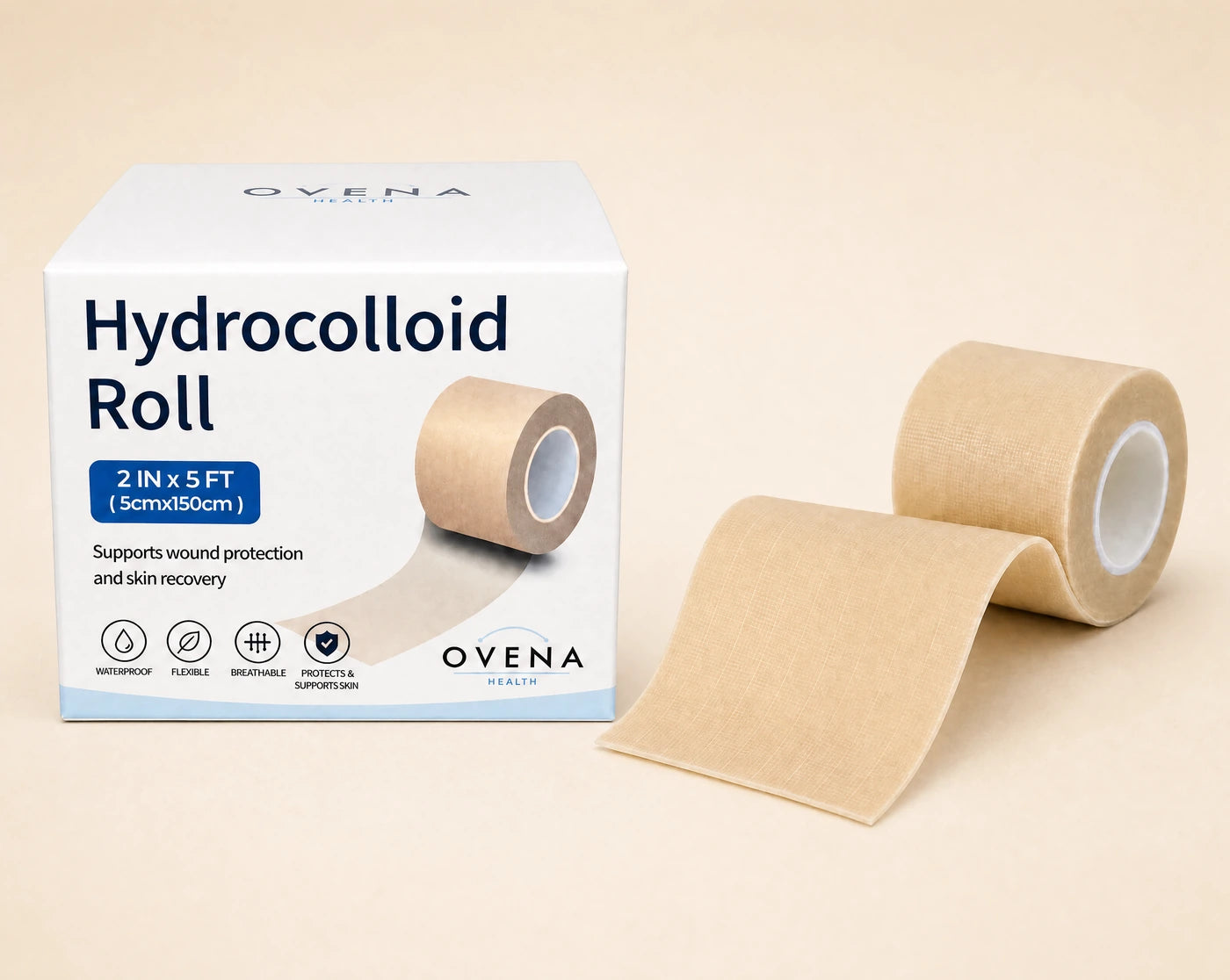
The Ovena Hydrocolloid Roll lets you cut an exact shape for any wound, no wasted dressing, no exposed edge, no gaps. Medical-grade adhesive, FSA/HSA eligible.
Shop the Ovena Hydrocolloid Roll →