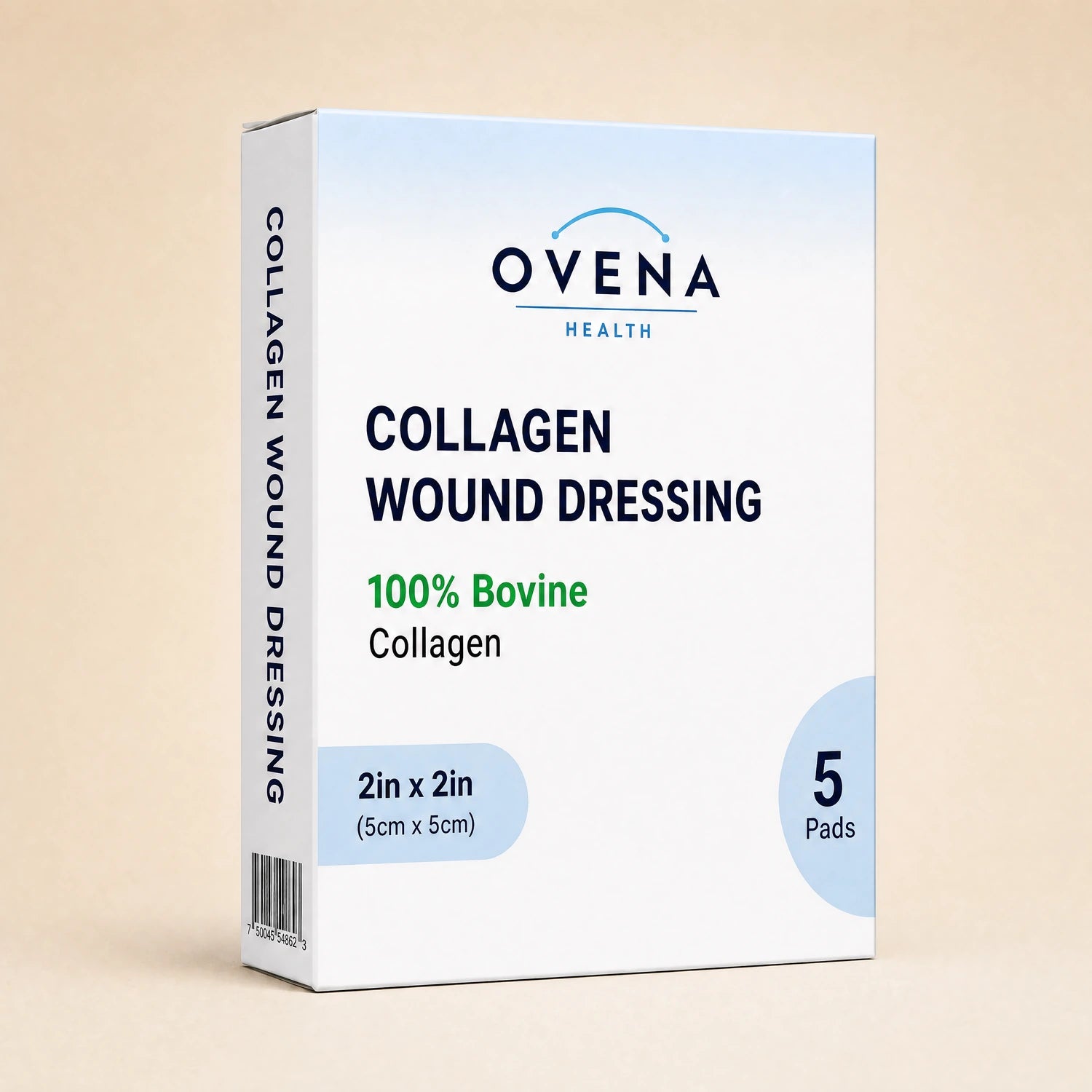
Collagen Wound Care
Collagen Wound Dressing, FDA 510(k) Cleared
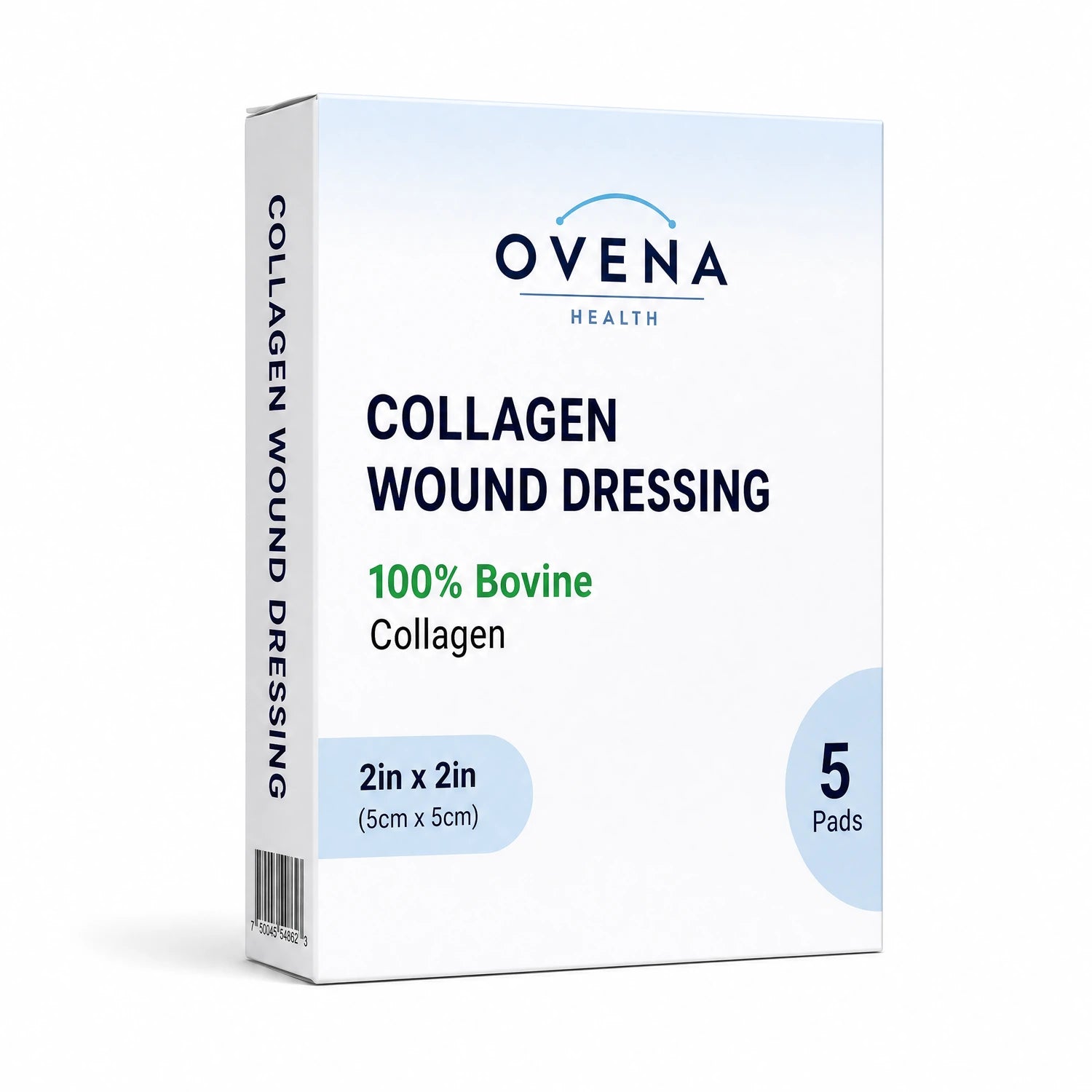


Collagen Wound Care
Collagen Wound Dressing, FDA 510(k) Cleared
- 100% Type I bovine collagen, FDA 510(k) cleared
- For diabetic foot ulcers, pressure injuries, and slow-healing wounds
- Collagen scaffold supports new granulation tissue
- Same regulatory class as hospital dressings, no prescription needed
- Sterile, individually sealed pads in 2x2 and 4x4 sizes
A collagen wound dressing for diabetic foot ulcers, pressure injuries, and surgical wounds that aren't closing on standard gauze, 100% Type I bovine collagen, FDA 510(k) cleared, the same regulatory class as hospital dressings and available without a prescription.
Ovena's sterile, FDA 510(k)-cleared Type I collagen wound dressings give the body a structural scaffold for repair across diabetic foot ulcers, pressure injuries, venous leg ulcers, surgical and Mohs wounds, skin tears, and other slow-to-heal chronic wounds. The collagen matrix attracts fibroblasts, supports new granulation tissue, and helps maintain the moist, balanced wound bed that healing depends on.
Clinical Studies
Diabetic ulcer RCT (2020) → Systematic review (2020) → · PubMed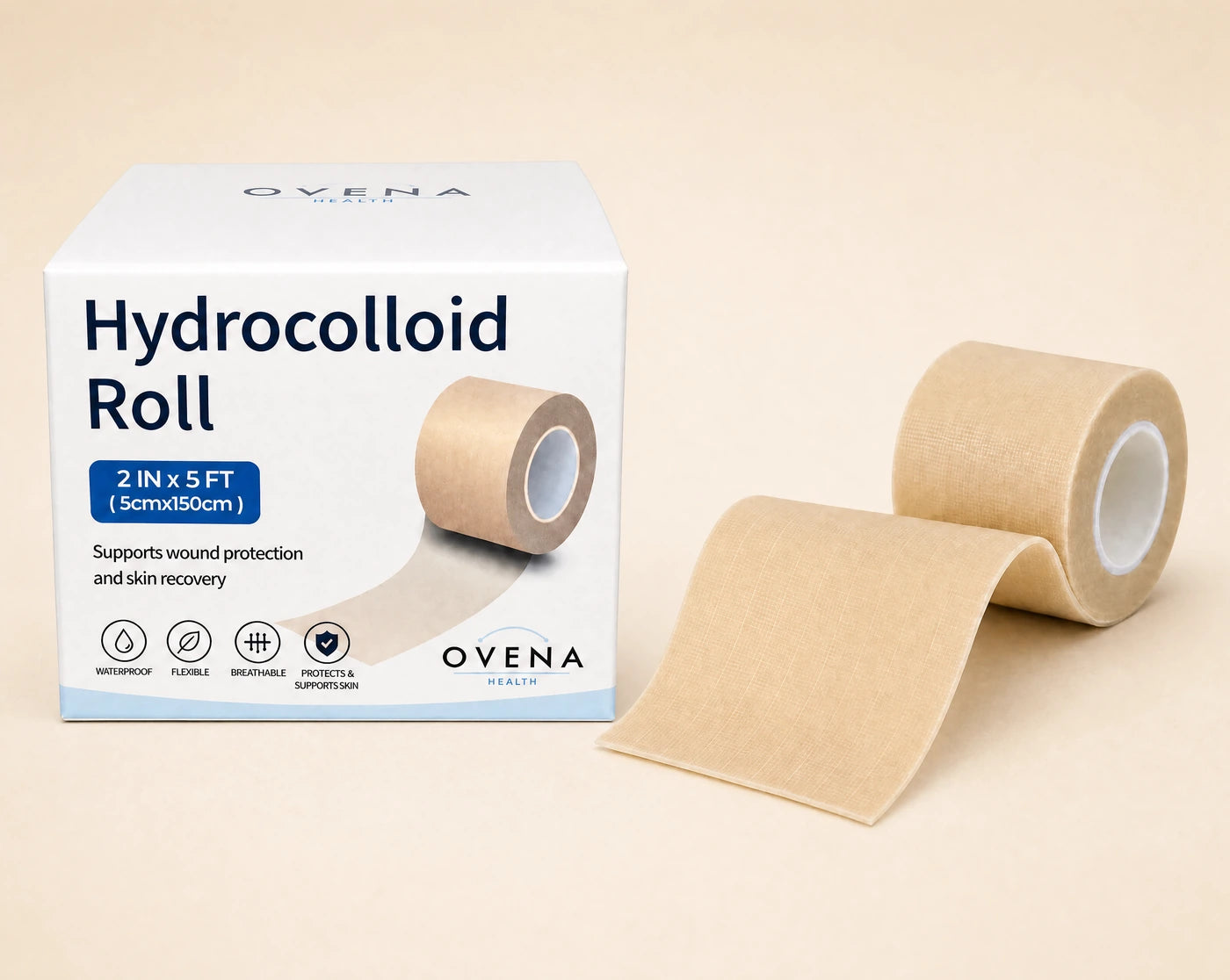
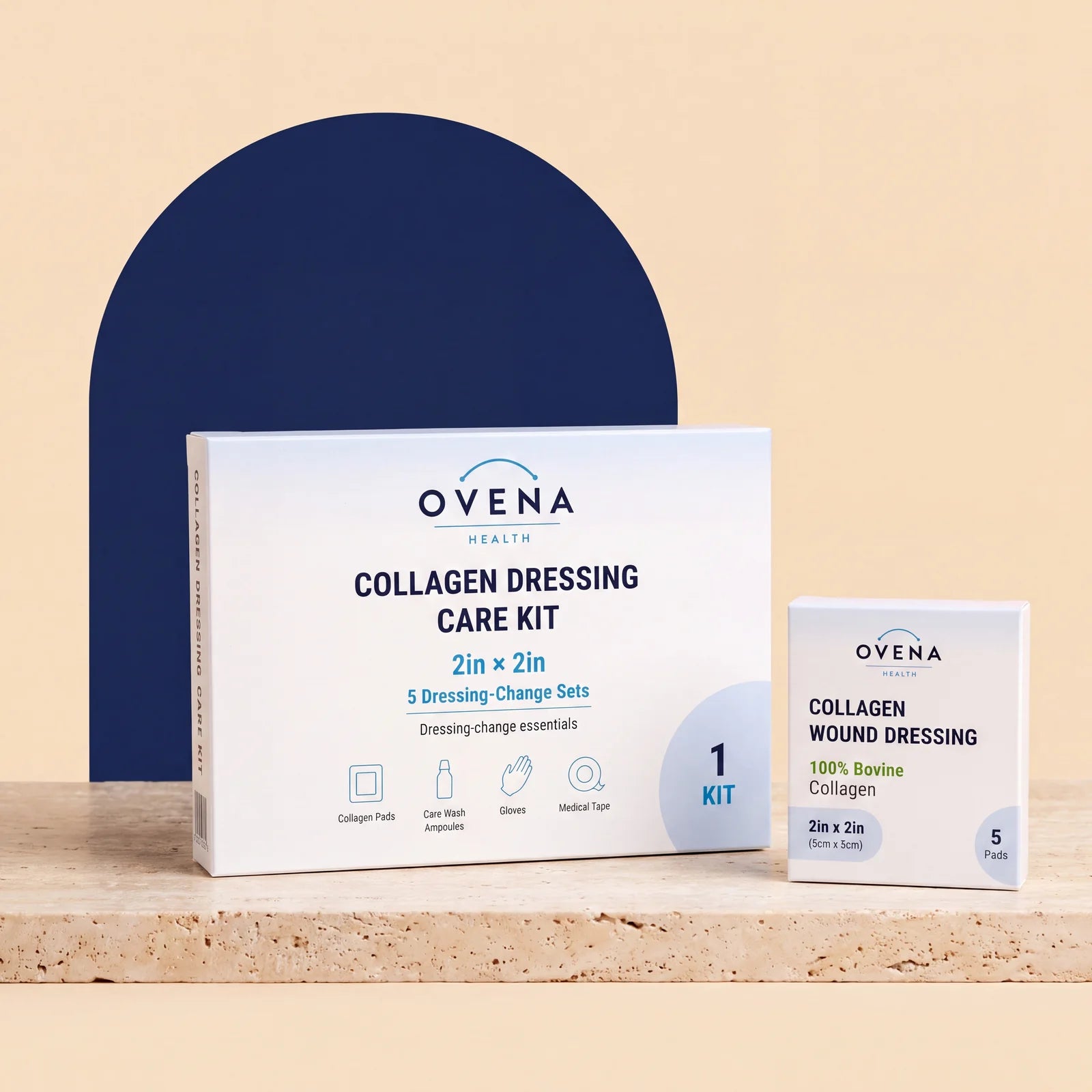
Conservative wound care
A first-line option in conservative wound care.
Collagen dressings are a mainstay of conservative wound care, supporting the body's own repair process before more invasive options are considered.
The conservative routine
Cleanse
Irrigate the wound with sterile saline.
Apply
Lay the collagen pad onto the wound bed.
Cover
Secure with a secondary dressing.
Reassess
Change every 1–3 days and monitor.
Why it works
Collagen scaffold
Native Type I collagen gives new cells a structure to migrate across.
Moist wound bed
Helps maintain the moist, balanced environment healing depends on.
Manages exudate
Absorbs light-to-moderate drainage and protects the surrounding skin.
Commonly used for
- Diabetic foot ulcers
- Pressure injuries
- Venous leg ulcers
- Surgical / Mohs wounds
- Skin tears
- Abrasions
FDA 510(k)-cleared · 100% Type I bovine collagen. Supports conservative wound management, not a substitute for professional medical care.
Collagen wound care
Built for the wound bed.
A 100% bovine Type I collagen matrix that supports clinician-directed wound care routines, in clean 2in and 4in formats.
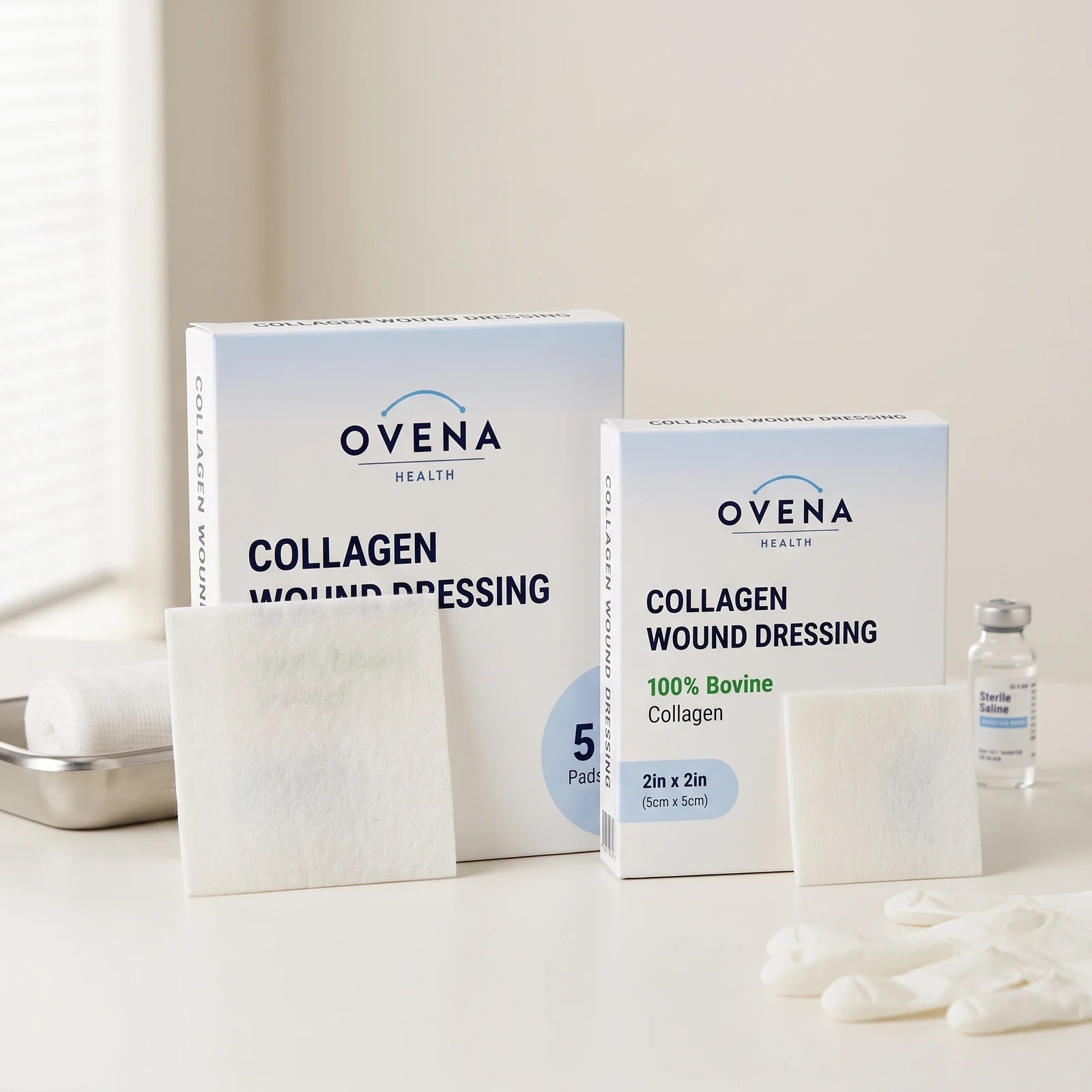
Collagen wound care
Sized up for larger wounds.
The same 100% Type I bovine collagen in a 4in x 4in pad — broader coverage for a larger wound, in one step.
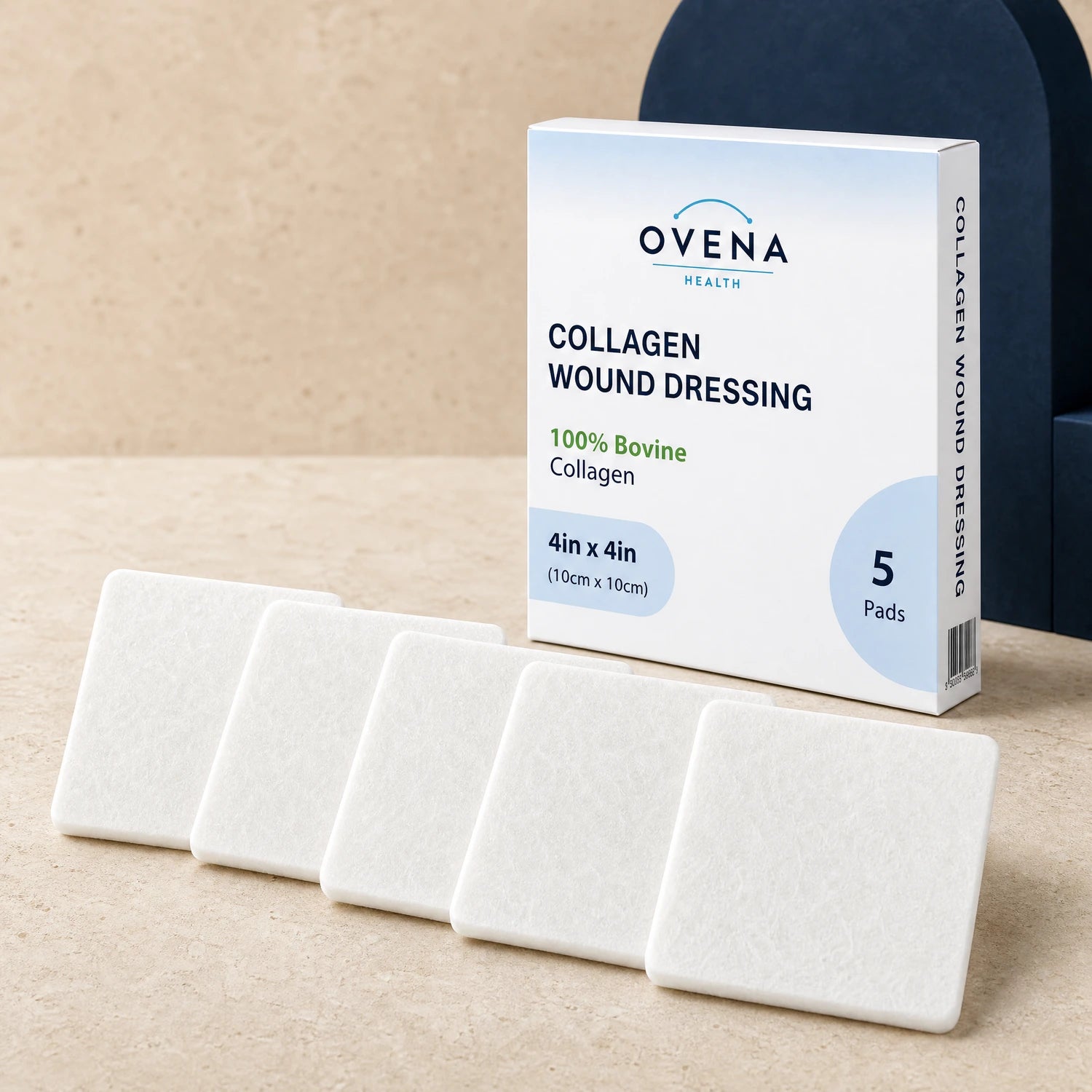

The category clinics use
Built for advanced wound care.
100% bovine Type I collagen — the dressing category wound clinics use across chronic and complex wounds. Work with your clinician.
General product information, not medical advice. Follow product directions and your clinician's instructions.
Choose your size
Two sizes. Same collagen.
2in x 2in
Small-area coverage for routine dressing changes. 5 sterile pads per box, $32.99.
4in x 4in
Larger coverage for bigger areas, with the same Type I bovine collagen. 5 pads, $55.00.
Need powder instead?
The same collagen in five single-use 1 g packets, see Collagen Wound Powder in Pairs well with below.

Which size
2×2 or 4×4?
Pick by the area you need to cover — 2 in × 2 in for smaller spots, 4 in × 4 in for larger wounds. Trim to fit.
General product information, not medical advice. Follow product directions and your clinician's instructions.
Material
100% Type I bovine collagen.
Sterile and absorbable
Each pad is sterile and gradually absorbed, a collagen scaffold that supports the wound healing process.
FDA 510(k)-cleared
Cleared as a Class II medical device, manufactured in an ISO 13485-certified facility.
Works with your routine
Used with a secondary cover dressing as part of a clinician-directed plan.
How to use
How it works
Cleanse
Irrigate and gently clean the wound bed with saline.
Apply
Place the collagen in direct contact with the wound surface.
Cover
Cover with a secondary dressing to keep the wound bed moist.
Reassess
Change per your clinician’s protocol as the collagen is absorbed.
Always follow your clinician's directions for your care plan.
Sealed for every change
Each pad in its own sterile pouch.
All five pads come individually sealed and sterilized. Peel one pouch open per dressing change, and the rest stay sterile in the box until you need them.
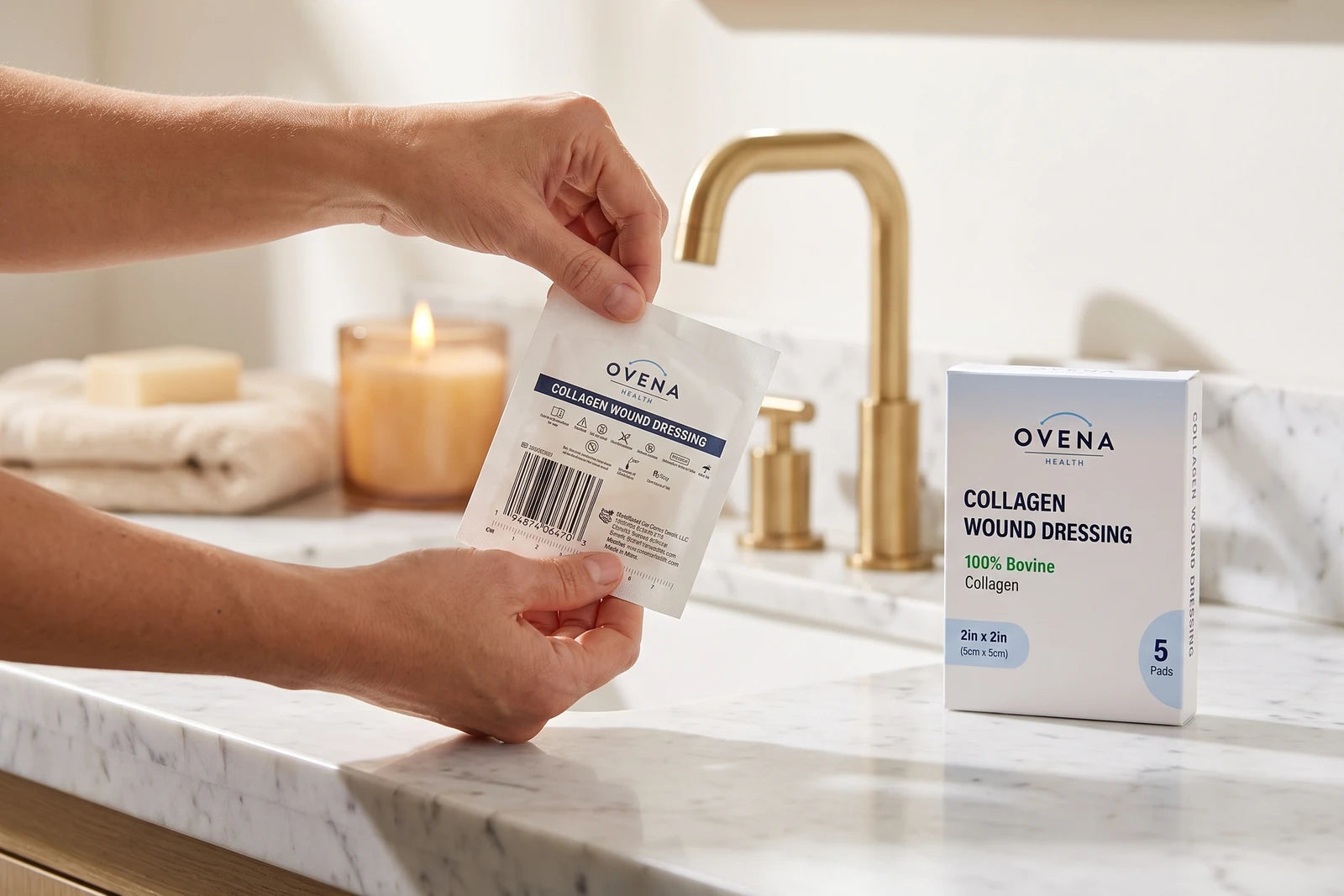
Sealed for every change
Each pad in its own sterile pouch.
All five pads come individually sealed and sterilized. Peel one pouch open per dressing change, and the rest stay sterile in the box until you need them.
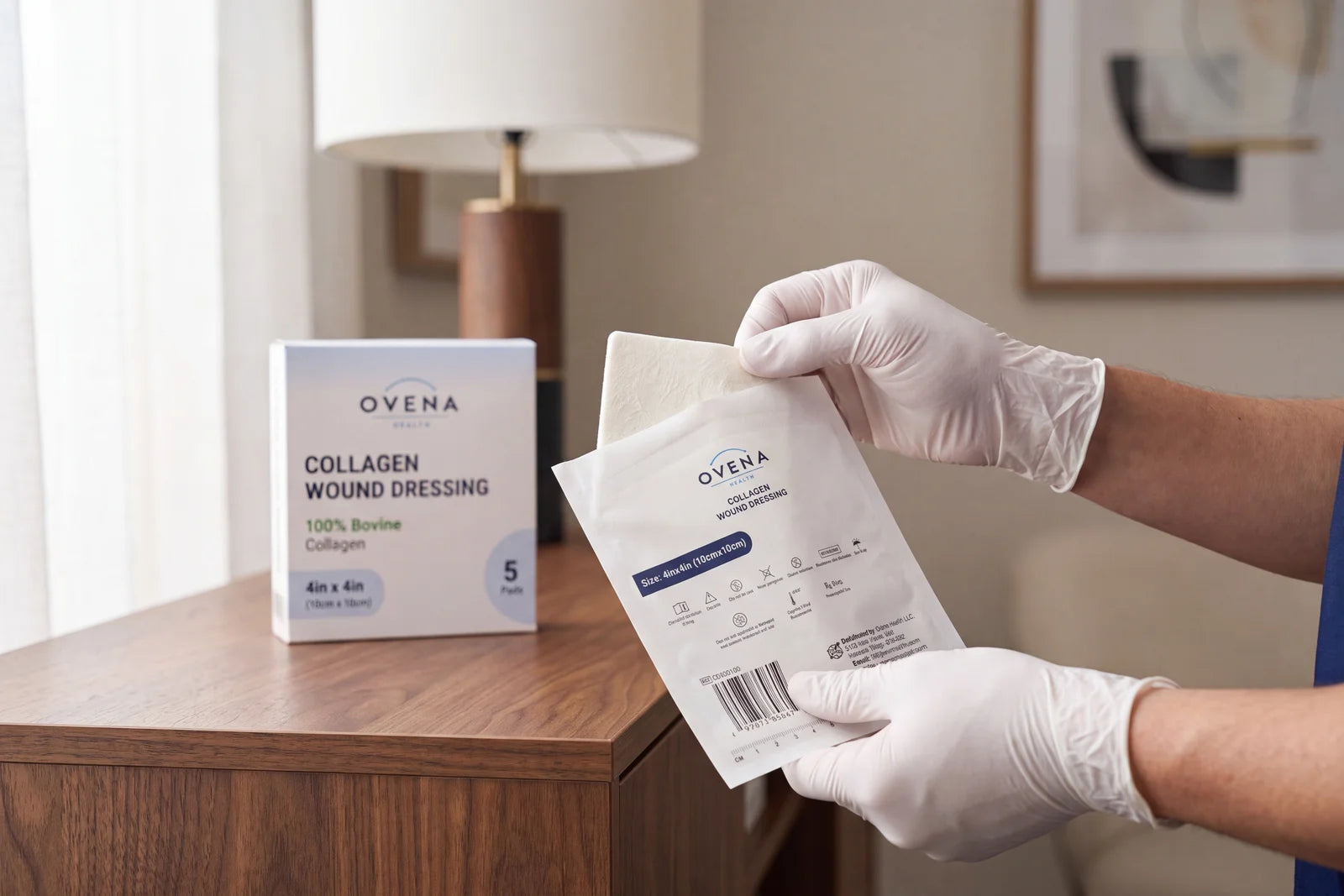
Product details
- Pack size
- 5 sterile pads
- Sizes
- 2in x 2in, 4in x 4in
- Material
- 100% Type I bovine collagen
- Classification
- FDA 510(k)-cleared, Class II
- HCPCS reference
- A6021 (2x2), A6022 (4x4)
- Manufacturing
- ISO 13485-certified facility
Good to know
- Not for use on infected wounds until the infection is addressed by your clinician.
- Do not use with a known sensitivity to bovine-derived materials.
- Requires a secondary cover dressing. Follow your clinician’s wound care plan.
Referenced research
The evidence behind the category.
Independent published research on this product category. Studies describe the category and mechanism, individual results vary.
RCT · 2020 · Adv Wound Care
Bovine collagen vs. standard care in diabetic foot ulcers
Randomized controlled trial: the collagen arm showed faster percentage wound-area reduction than standard moist wound care in chronic diabetic foot ulcers.
Systematic review · 2020 · J Wound Care
Advanced dressings for chronic, non-healing wounds
Collagen scaffolds outperformed standard gauze across healing endpoints in chronic non-healing wounds.
Frequently asked questions
Is this the same product hospitals use?
Functionally yes, same FDA 510(k) clearance category (Class II medical device), same 100% Type I bovine collagen substrate, same MMP-binding mechanism. The difference is brand markup. Manufactured in an ISO 13485-certified facility.
How is this different from a regular bandage?
A bandage covers and waits. A collagen dressing actively binds matrix metalloproteinases (MMPs), the enzymes that stall chronic wound healing, and provides a scaffold for new tissue to grow into. The collagen is gradually absorbed by the body, so you don’t peel it off.
What wounds is this cleared for?
FDA 510(k) cleared for partial- and full-thickness wounds: diabetic foot ulcers, venous leg ulcers, pressure injuries stages 2–4, post-Mohs and surgical wounds healing by secondary intention, donor sites, and second-degree burns.
How long does each pad last on the wound?
1–3 days between changes for most wounds. The collagen is gradually absorbed, you’ll see it become a gel before the next change. Cover with a non-adherent secondary dressing.
Is this FSA / HSA eligible?
Yes, collagen wound dressings fall under HCPCS A6021, A6022, A6010 and are typically FSA/HSA eligible. We provide an itemized receipt with the HCPCS code on request for reimbursement claims.
Can I use it on an infected wound?
No. Treat the infection first under clinician guidance (topical or systemic antimicrobials). Once the infection is controlled, collagen can resume. See our Collagen 101 guide for the full clinical decision tree.
Further reading
Clinically reviewed by Dr. David Chahine, MD. The deeper-dive guides our customers ask for most often.
How to apply a collagen wound dressing
The 6-step protocol a wound care nurse uses.
Read guide →FAQ · 5 minHow often to change a collagen dressing
The 1–3 day standard and when to deviate.
Read guide →Pillar · 9 minCollagen for diabetic foot ulcers
Why DFUs stay stuck and the protocol that actually heals them.
Read guide →Pillar · 8 minPressure ulcer dressing by stage (1–4)
The dressing your wound nurse would pick for each stage.
Read guide →Questions about wound care?
Talk to our clinical team, or take the 30-second quiz to find the right care for your wound.
Clinical support →