
Third twelve in a row. Legs that still clock out.
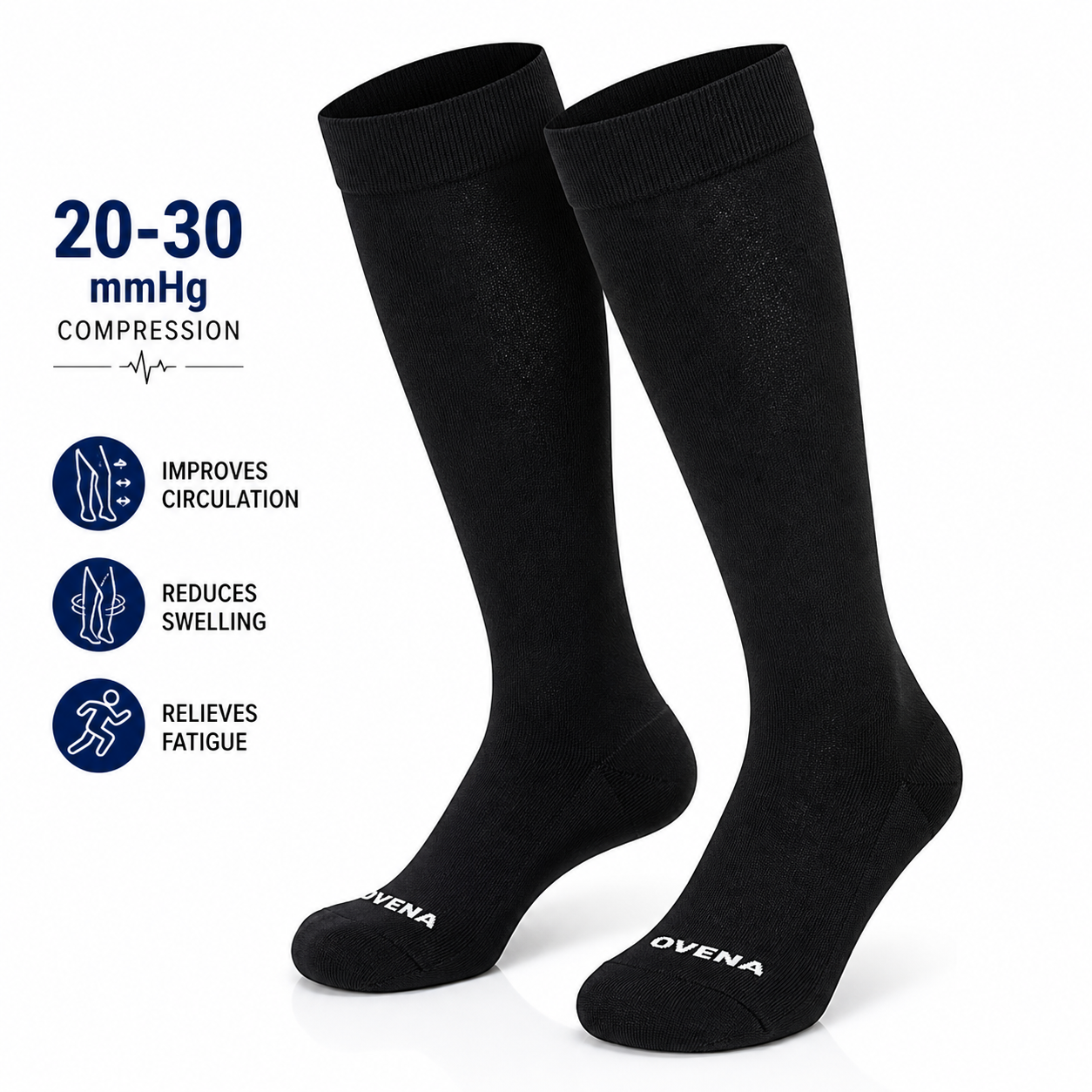
Twelve-hour shifts that run thirteen. Miles of corridor before lunch. Graduated compression — firmest at the ankle, easing up the calf — fights the end-of-shift heaviness and visible swelling, so the walk to the car isn’t a limp.
Bargain pairs go slack after a few washes and quietly stop squeezing. These are built — and cared for — to hold their compression through the rotation.
- Graduated squeeze — firmest at the ankle, easing up the calf
- Stay-put top band — doesn’t roll, bind, or bite behind the knee
- Seamless toe & breathable knit — built for hour twelve, not hour one

You’ve put compression on patients all day. This pair is the daily-wear kind — graduated support built for standing shifts, from the team behind our FDA 510(k)-cleared collagen dressings and powder.
Four miles a shift isn’t a workout. It’s Tuesday.
Nurses log 8,000–14,000 steps a twelve. Teachers stand from first period to the last bell. Warehouse crews walk double digits on concrete. The squeeze is for all of it.
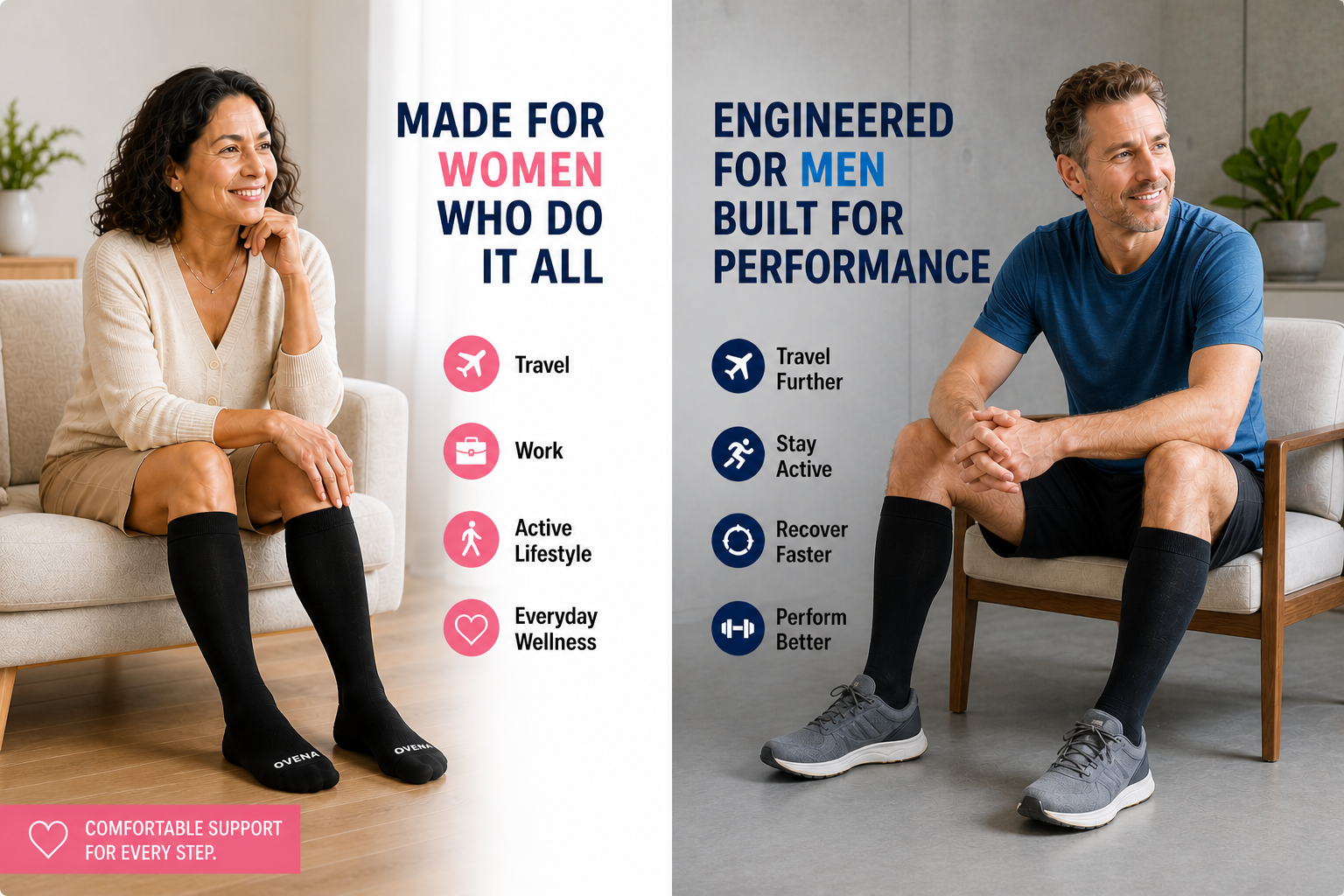
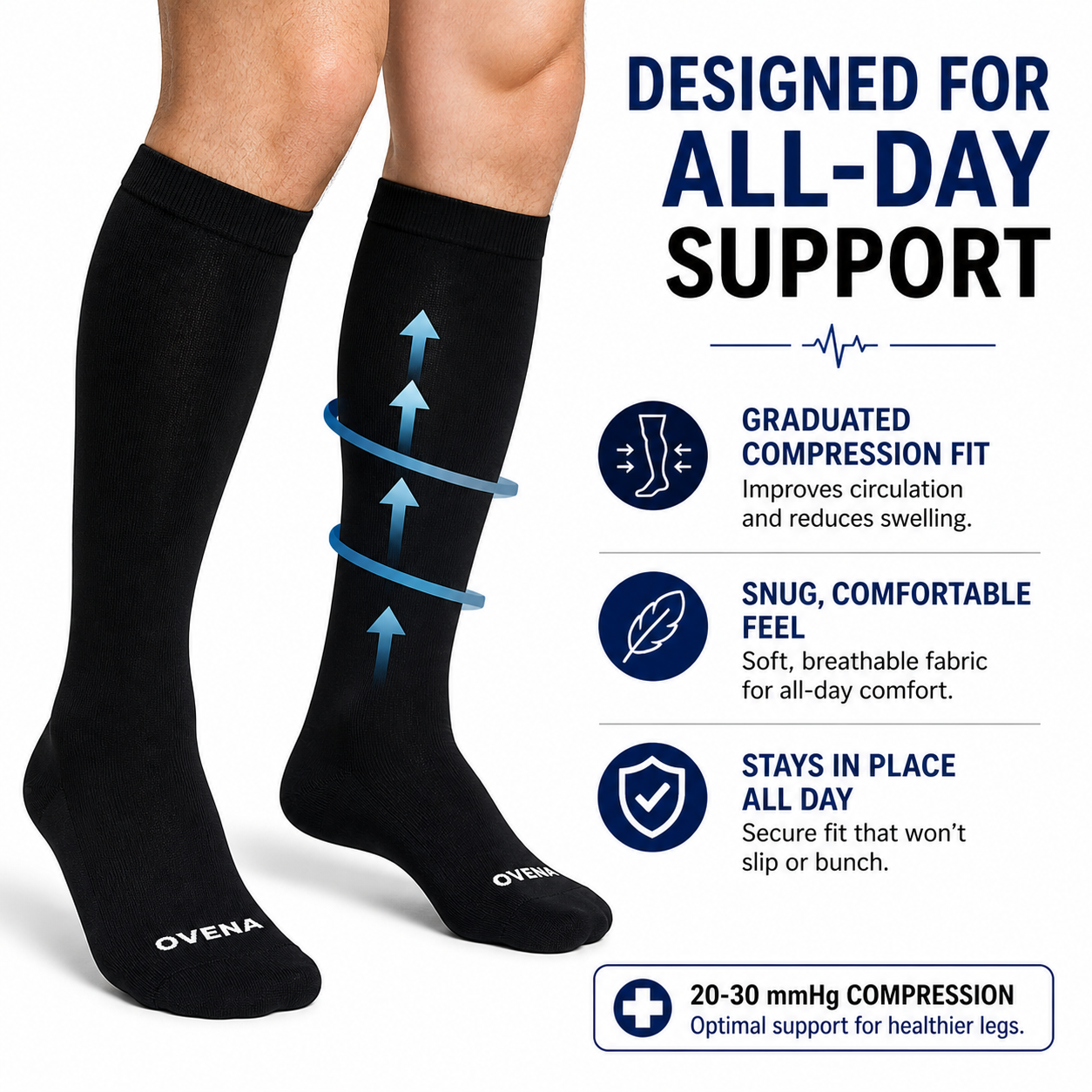
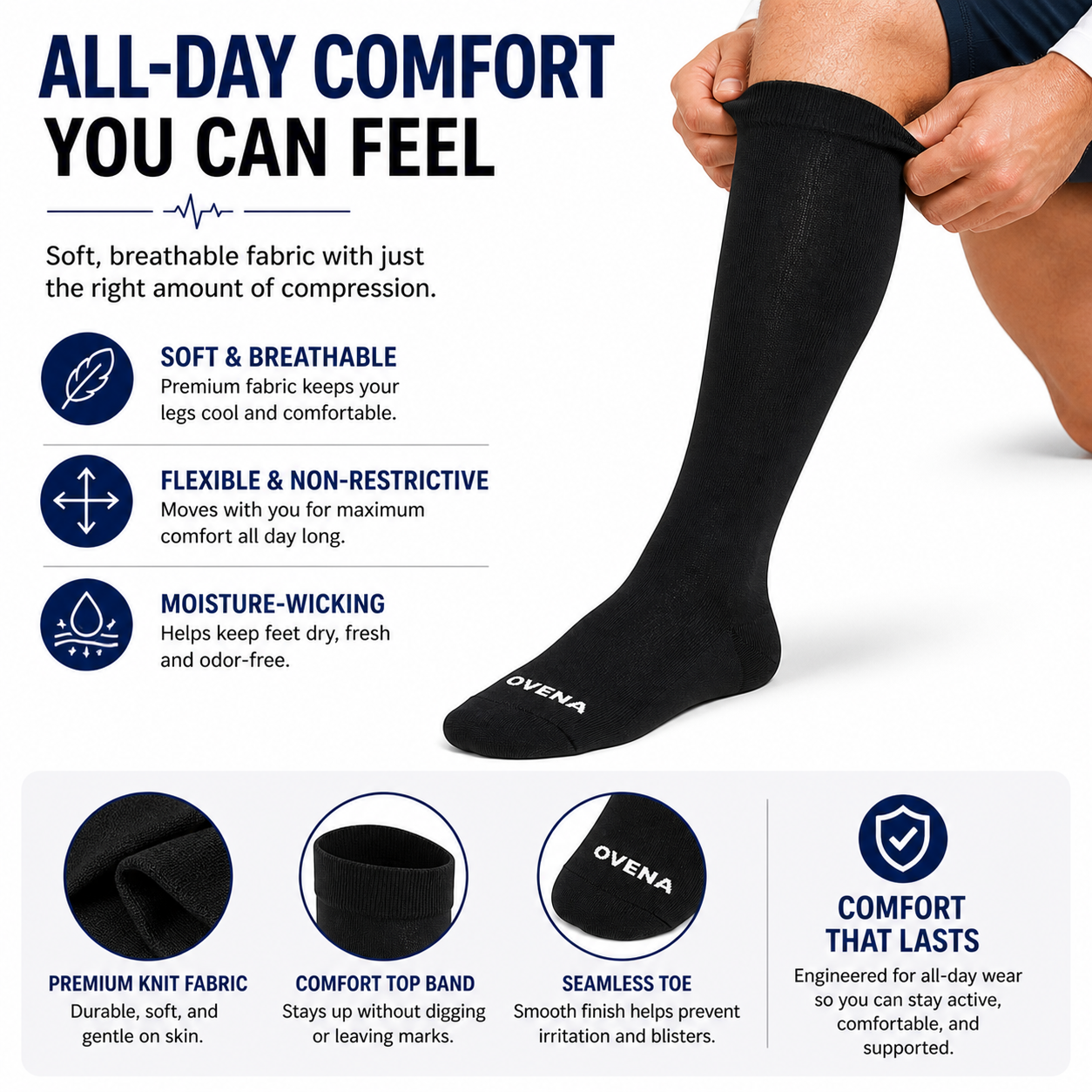
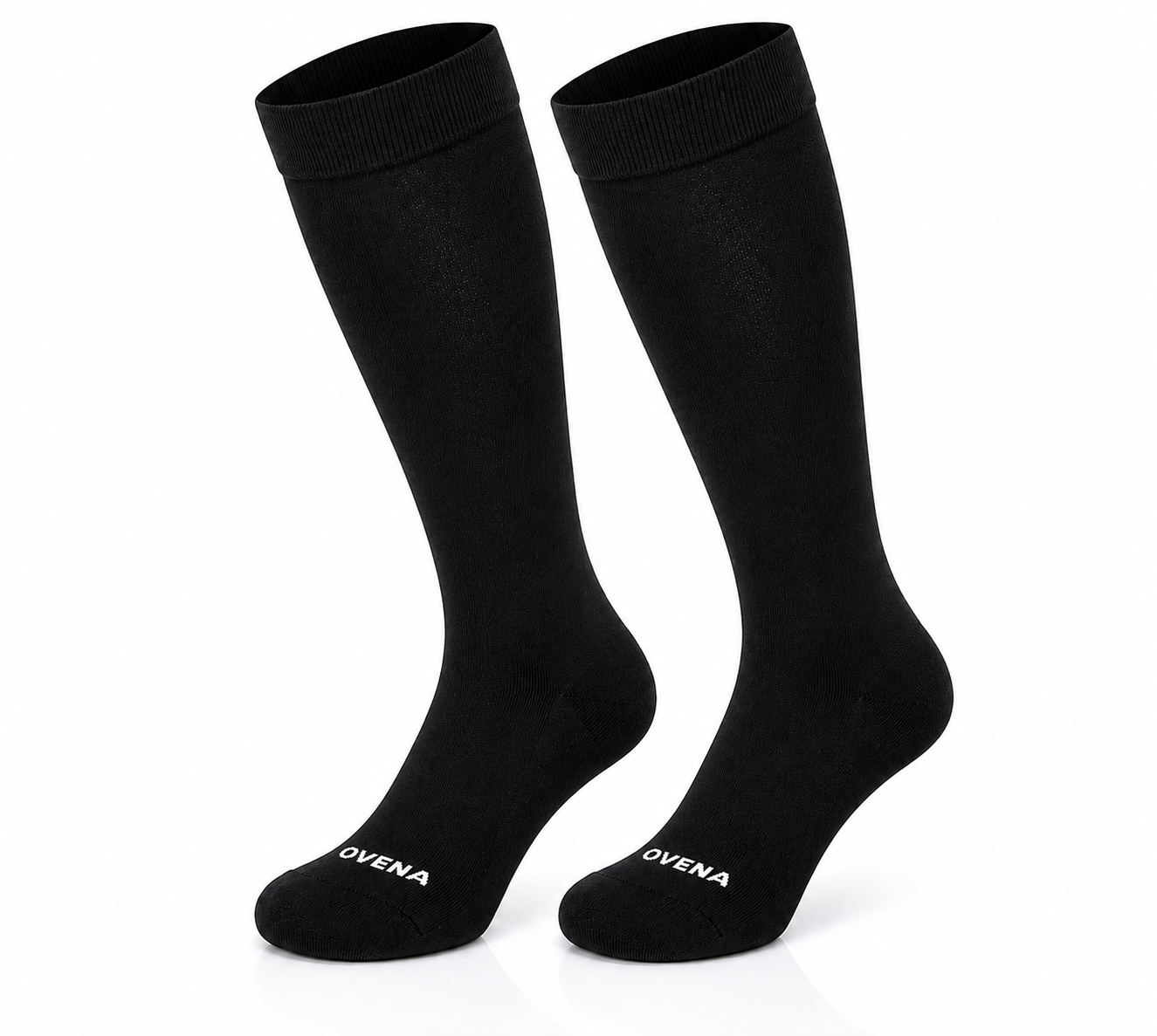
Graduated pressure, working with your legs.
Compression is strongest at the ankle and eases up the calf — supporting circulation against a long day of standing, fighting tired, achy, heavy legs and visible end-of-shift swelling. Give new legs a short adjustment period; the squeeze becomes the ritual.
The numbers your legs already know.
Step and mileage figures are published averages for 12-hour hospital shifts; individual shifts vary. Compression level is the product’s stated specification.
Reasons to buy with confidence.
Physician-led and made in an ISO 13485 facility — here’s what stands behind every pair. Verified customer photos will appear here as they come in.
From 5:30 a.m. to the walk to the car.
What the pair does across a twelve — and how to keep the squeeze alive wash after wash.
On before the badge
Seated, sock gathered, heel set — the squeeze settles in ankle-first.
Through the miles
Graduated support works every standing hour — med passes, charting, hallway laps.
Clock-out check
Less of the heavy-leg drag at hour twelve — the walk to the car, not the limp.
Compression-safe wash
Cold, gentle, air dry. Heat kills elastane — care is what keeps the squeeze.
Questions, answered.
What level of compression is this?
How do I pick a size?
Will they roll down or dig in by hour ten?
Is this the same thing as the white hospital stockings?
How do I wash them without killing the squeeze?
Are they only for nurses?
Is it FSA/HSA eligible?
One pair, or one for every twelve.
All sizes $24.99 a pair — choose your size in the box above. Ships from the US.
Low-risk to try.
Not ready? Take the shift-legs guide.
The one-page guide to compression levels, the pre-shift donning ritual, and the wash routine that keeps the squeeze alive — plus 15% off your first pair.
One email with the guide and your code. Unsubscribe anytime.
Hour 12 shouldn’t feel like hour 12. Suit up.
Graduated 20–30 mmHg compression, a top band that stays put, and the OVENA toe — on before the badge, working until you clock out.
Get my pair — $24.99Ovena Health Compression Socks provide graduated 20–30 mmHg support for tired, achy legs and visible swelling associated with long periods of standing. This page is for general product information and is not medical advice. Compression at this level isn’t for everyone: if you have peripheral arterial disease, heart failure, severe neuropathy, skin infection, or circulation concerns — or if you’re unsure which compression level is right for you — talk with a clinician before use. New, sudden, or one-sided leg swelling should be evaluated by a clinician before using compression. Stop use if you notice numbness, tingling, discoloration, or increased discomfort. FSA/HSA eligibility varies by plan.